








Introduction
Few cases in Indian constitutional history have had as deep an impact as the Indira Sawhney v. Union of India (1992) judgment. Popularly known as the Mandal Commission case, it dealt with the contentious issue of reservation in India and the balance between equality and social justice.

This landmark ruling not only upheld 27% reservation for Other Backward Classes (OBCs) in central services but also introduced the concept of the “creamy layer”, reshaping India’s affirmative action policies.
Background: The Mandal Commission and OBC Reservations
After independence, reservation policies initially focused on Scheduled Castes (SCs) and Scheduled Tribes (STs). However, the Mandal Commission (1979) recommended that 27% reservation be extended to OBCs to address systemic inequalities.
In 1990, Prime Minister V.P. Singh implemented the recommendations, sparking widespread protests, self-immolations, and heated debates about merit, equality, and caste-based reservation.
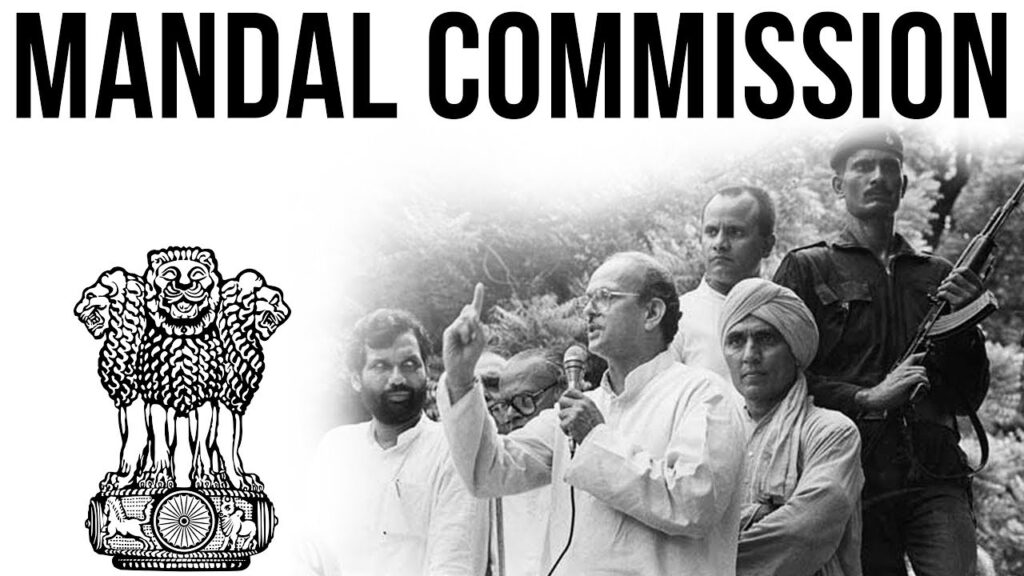
It was in this turbulent atmosphere that the case of Indira Sawhney reached the Supreme Court, challenging the constitutional validity of OBC reservations.
The Judgment of 1992
Delivered by a nine-judge bench, the Indira Sawhney judgment became a defining moment for India’s reservation system.
Key Highlights of the Judgment:
- 27% Reservation for OBCs Upheld – Affirmed the government’s decision based on Article 16(4) of the Constitution.
- 50% Reservation Cap – Set a ceiling, holding that reservations should not exceed 50%, except in extraordinary cases.
- Creamy Layer Exclusion – Wealthier and better-educated OBCs were excluded from benefits, ensuring that only the truly disadvantaged gained.
- No Reservation in Promotions – The Court ruled that reservations cannot extend to promotions, though this was later modified by constitutional amendments.
Fill this Form to Subscribe:
This balanced approach allowed reservations while preventing excessive dilution of meritocracy.
Social Justice and Equality: The Core Debate
The Indira Sawhney case highlighted the tension between formal equality (treating everyone the same) and substantive equality (addressing systemic disadvantages).
The Court recognized that social justice is a constitutional mandate, and reservation is one of the tools to achieve it. At the same time, it tried to ensure that reservations did not become permanent or excessive.
Case Studies & Real-World Impact
- Tamil Nadu Reservation Policy: The state provides over 69% reservation, often cited as exceeding the 50% cap but justified under “special circumstances.”
- M. Nagaraj v. Union of India (2006): Revisited the issue of reservations in promotions, reaffirming that equality must be balanced with social justice.
- Recent OBC Reservation in NEET Exams (2021): The central government’s decision to extend OBC quota in medical education reflects the continuing relevance of the Indira Sawhney precedent.
“Social justice is the foundation of a democratic society.”
Justice B.P. Jeevan Reddy
Benefits of the Judgment
- Empowered marginalized OBC communities with opportunities in education and employment.
- Prevented misuse of reservation by introducing the creamy layer filter.
- Balanced individual merit with the constitutional goal of social justice.
Criticisms of the Judgment
- The creamy layer concept is criticized for being vague and exclusionary.
- Some argue that caste-based reservations perpetuate caste identities rather than eliminate them.
- The 50% cap has been debated, with states like Tamil Nadu pushing for exceptions.
Conclusion
The Indira Sawhney v. Union of India (1992) judgment is not just about OBC reservation, but about the soul of Indian democracy. It reaffirmed that social justice is integral to the Constitution while ensuring checks on excessive quotas.
Even decades later, debates on reservation, equality, and merit remain alive in India, and the principles laid down in this case continue to guide courts, governments, and policymakers.





Leave a Reply